

Join our zero2eight Substack community for more discussion about the latest news in early care and education. Sign up now.
The latest Nation’s Report Card results didn’t arrive as a warning; they arrived as a verdict. Reading scores are down again, and the gaps are widening. Lower-performing fourth and eighth graders posted the worst scores in more than 30 years. Not one state improved its eighth-grade reading score.
In response, the national conversation has kicked into high gear. More than a dozen states have rewritten literacy laws, banning discredited instructional methods and mandating phonics-based curricula. Districts are overhauling materials. Parents are being urged to act in a multitude of ways: reading more at home, hiring a tutor, trying multiple apps.
I’ve spent decades as a classroom teacher, literacy coach, researcher, and now training future educators. I’ve worked with children who thrive and children who need extra support with reading. And I’ve seen how often parents are sent searching for complicated solutions while underestimating the impact of what happens in ordinary moments at home. That’s overlooking something both simpler and more immediate: Families already have powerful, evidence-based tools at their fingertips, and they don’t cost anything.
This isn’t a critique of schools. The evidence of what’s possible when schools commit fully is compelling: Louisiana became the only state to fully rebound in reading post-pandemic. Mississippi climbed from near the bottom of national rankings to the top ten in fourth-grade reading. Systematic, structured literacy instruction works when it’s implemented well.
However, the best outcomes happen when classrooms and homes work together. The current reading crisis has exposed how much everyday language, attention and early habits have been neglected in shaping literacy, long before a child is ever formally tested.
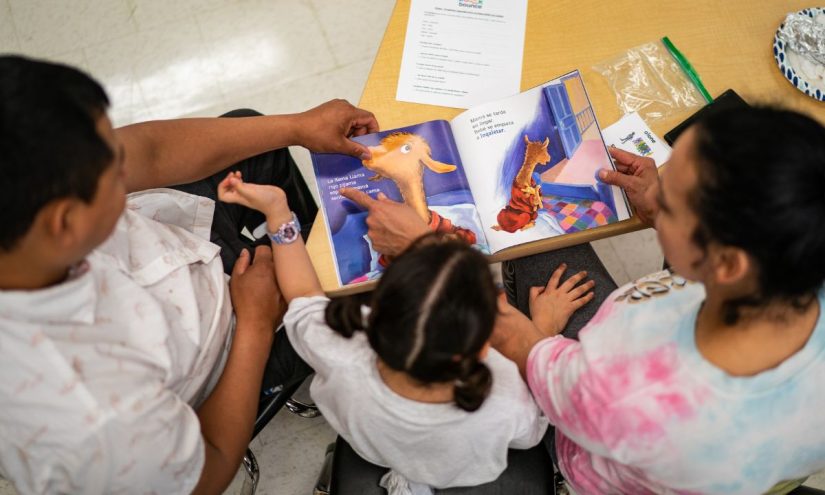
Start with something deceptively simple: conversation. Reading is not just about decoding words on a page; it’s built on language. When parents narrate what they’re doing, ask questions and engage children in back-and-forth talk, they are building vocabulary and comprehension in real time. This isn’t enrichment. It’s the foundation strong readers stand on, and it happens in the car, at the kitchen table and at the checkout line.
Then there’s the way reading itself gets treated. Too often, it becomes something children think only “counts” as reading if it’s from a book. But literacy lives in the real world. A grocery list. A recipe. Street signs. Instructions. When children see that print carries meaning in daily life, they begin to understand why reading matters at all.
And yet, in a culture saturated with screens and subscriptions, one of the most effective tools is analog: the public library. It’s easy to overlook because it’s free. But access to physical books — and the sustained attention they encourage — offers something many digital experiences do not. At a time when families are told to download more, the better advice may be to step into a quieter space and let a child linger with a book.
Honesty about the basics matters too. Letters and sounds are not outdated or trivial; they are essential. Helping children learn the alphabet, recognize letters in the environment or spell their own name is not busywork. It is preparation for the moment formal instruction begins and a base for whether that instruction sticks.
Perhaps most urgently, parents should stop being told to “wait and see” or “they’ll grow out of it.” These may sound reassuring, but in reading, it can be costly. Unlike spoken language, reading does not develop naturally without direct teaching. When a child consistently avoids reading, guesses at words, or becomes visibly frustrated, those are not quirks to outgrow. They are early warning signs.
The earlier parents and educators respond, the easier the path forward, and the window for intervention narrows quickly. What looks like a behavioral problem in fourth grade often traces back to a foundational gap that could have been caught in kindergarten.
Parents Want to Support Their Kids. Behavioral Science Can Help Them Follow Through
None of this will single-handedly reverse national test scores. But that’s not the point. The point is that in a moment when the literacy conversation is dominated by policy, programs and products, the most immediate and equitable intervention available risks being overlooked entirely: what families do every day.
The NAEP data tells a story of stratification: scores rising for high-performing students while struggling students fall further behind. That divide is not about capacity. It is, in part, about access to the kinds of early language experiences that wire children for reading before they ever enter a classroom. Debates about curriculum mandates and state laws are worth having. But while those debates unfold, children are sitting at kitchen tables tonight.
Parents are not a backup plan for struggling schools. They are a child’s first and most consistent teachers. The reading crisis is real. But so is the quiet, largely untapped power sitting in ordinary moments.
If better outcomes are the goal, the question shouldn’t stop at what schools will do differently next year. It should also demand answers about what’s already possible today — and why anyone has been told it isn’t enough.
Did you use this article in your work?
We’d love to hear how The 74’s reporting is helping educators, researchers, and policymakers. Tell us how
