

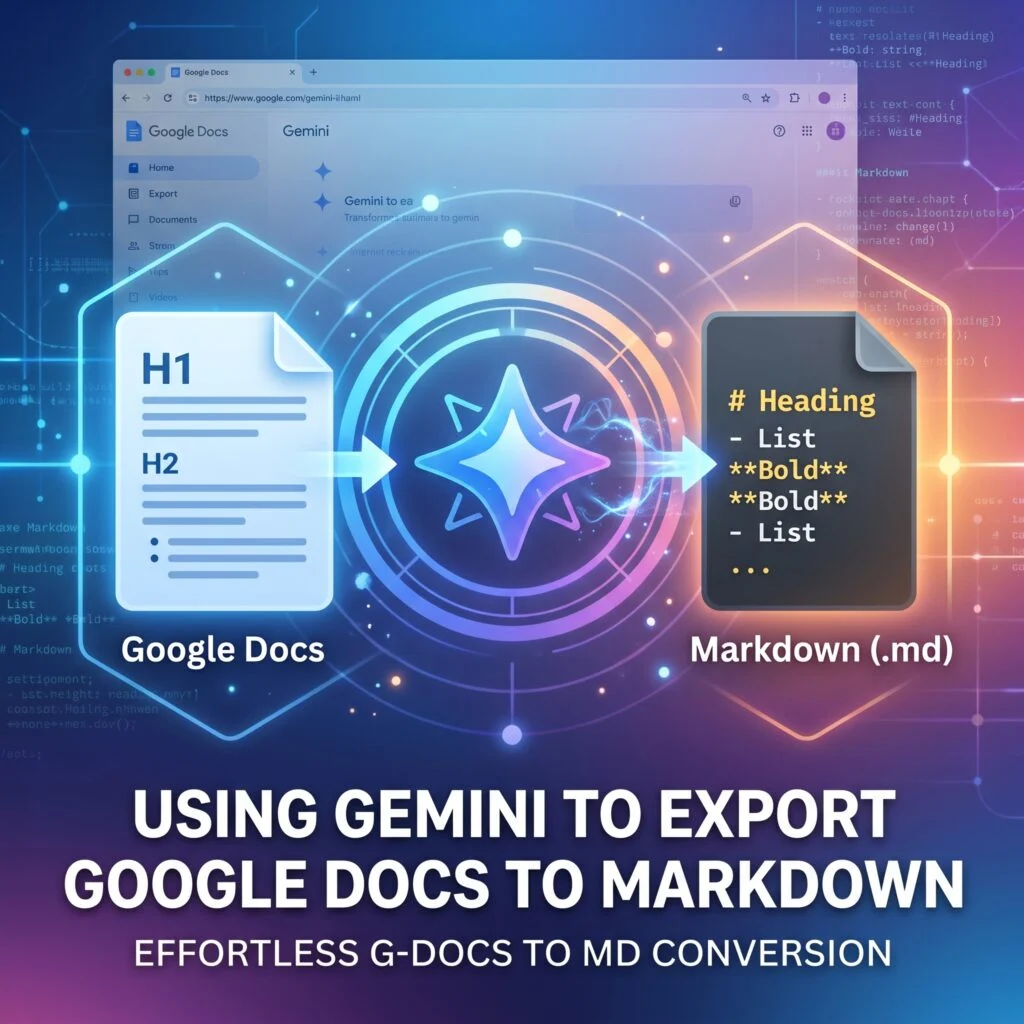
Think of Markdown as the universal translator for the internet. It is a lightweight language that uses simple symbols to handle formatting instead of hidden, messy code. It is designed to be human readable, meaning you can look at the raw text and still understand the structure without needing a special viewer.
A Markdown Tutorial
Getting started with Markdown is easier than you might think. Here are the most common symbols you will use:
Headings: Use hashtags at the start of a line. One hashtag (#) is a main title, while two (##) or three (###) create subheadings.
Emphasis: Wrap your text in double asterisks for bold (**bold**) or single asterisks for italics (*italics*).
Lists: Start a line with a dash (-) or an asterisk (*) to create a bulleted list. Use numbers (1.) for an ordered list.
Links: Put the display text in brackets and the URL in parentheses, like this: [Visit Google](https://www.google.com).
Because it is essentially plain text, your work never gets locked into a specific software. It stays portable, professional, and ready for any platform.
