

Join our zero2eight Substack community for more discussion about the latest news in early care and education. Sign up now.
About ten years ago, Rhena Hicks’ husband didn’t get any paternity leave from his employer, and their state, Virginia, wasn’t among those that had enacted a paid family leave program. So the only time he could take off around their son’s birth were the ten days of paid time off he had been able to save up.
Hicks said her husband had hoped to spend those days at home bonding with his son and helping her before returning to work, but life had other plans. After she gave birth, their son was admitted to the neonatal intensive care unit for ten days, which consumed all of his time and meant he had to return to work immediately after they brought their son home from the hospital. “It would have been so nice for him to experience our son, taking him home,” Hicks said.
Instead, Hicks was “just completely alone” with a newborn while her husband was working, she said. “I was just in a daze.” Her memories of the time are clouded, she now thinks possibly by postpartum depression, which she believes would have been prevented if her husband had been able to take paid family leave to be with her and their son. His absence in those early days also set up a “weird imbalance” where Hicks felt she had to take on more than her share of parenting. That pattern, once established, can be hard to undo. Studies have found that, if fathers take parental leave, they are more involved in domestic work later on. Meanwhile, her husband lost out on spending time with their son when he was a newborn who changed daily. Given that such young babies sleep a lot during the day, Hicks distinctly remembers telling her husband to rush home from work while her son was awake. “I was like, ‘Hurry, his eyes are open,’” she said. “It’s those little moments he didn’t get to experience.”
Paid family leave “is something that you want to be there for your worst days and your best days,” Hicks added.
Hicks, who is now co-director of Freedom Virginia, a political advocacy organization, was part of an effort that has now ensured that future Virginia parents won’t have to experience what she and her husband went through. On April 22, Governor Abigail Spanberger signed legislation into law that makes Virginia the 15th state to pass a paid family and medical leave program.
The program will start paying benefits in December 2028 and is expected to cover more than 3 million private-sector workers, according to the National Partnership for Women & Families. Eligible workers will receive 80% of their average weekly wages up to a cap for up to 12 weeks a year to welcome a new child, care for a family member with a serious health condition, or recover from their own medical events. Employers will have to give them their jobs back when they return.
“Millions of families across Virginia won’t have to choose between their paychecks and taking care of themselves or their loved ones or bonding with a new baby,” said Elizabeth Gedmark, vice president at A Better Balance, a nonprofit advocacy organization. “It’s a really strong program.”
Virginia’s statewide paid family and medical leave program is also the first to be passed by a Southern state, which advocates say could create more momentum for the policy nationwide. Spanberger called it a “historic step forward” in a statement after signing the law, saying, “Thanks to this landmark law, millions of Virginians will no longer be forced to give up their paycheck when they welcome a child, or when their loved one faces a serious illness.”
“This is a really huge victory for families in Virginia, for the movement nationally, and for the whole region,” Gedmark said.
Advocates have been fighting to enact paid family leave in Virginia for about a decade, Hicks said. The coalition of organizations behind it was able to learn from the 14 other states that had already passed bills. It also courted the support of small business owners who wanted to be able to offer such a benefit and compete with larger entities but couldn’t afford the overhead. Those business owners needed “a state program that evens the playing field against large corporations,” she said. There was also pressure to compete with Virginia’s neighbors: Lawmakers in Maryland passed a paid family leave bill in 2022, while Washington, D.C. has had a program since 2020.
State Paid Leave Programs Expand, Reaching More Workers
But Hicks said momentum for paid family leave in Virginia “really picked up” about five years ago, when the COVID-19 pandemic hit. The crisis “showed us that social structure and social net that everyone needs,” she said. At the same time, younger candidates, especially women, started winning seats in the state legislature, bringing new perspectives and life experiences, Hicks said. Freedom Virginia intentionally supported candidates who said they would support paid family leave. Paid family leave legislation “got really close” to passage in the last two years, she said, but ran aground on opposition from former Republican Gov. Glenn Youngkin, who twice vetoed bills that the general assembly had passed. “The support was there, and it was growing,” she said.
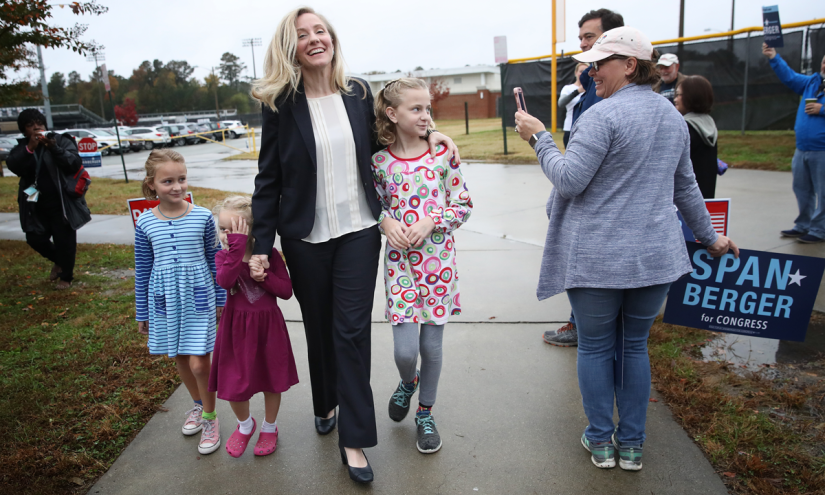
Then Spanberger, who has three school-aged daughters, ran for governor promising to sign such legislation into law. “It’s been a really long time since we’ve had, not just a governor with school-aged children to understand what working families are going through, but someone who’s had the experience of motherhood and giving birth,” Hicks noted. Both Hicks and Gedmark said they think Spanberger’s vocal support for family leave helped her win. “It just goes to show, if you campaign on giving workers and their families concrete action that improves their lives and helps pocketbooks,” Gedmark said, “it’s a really good political strategy.”
Both Hicks and Gedmark argued that it matters to have a state in the South enact paid family leave. Nearby states will “feel pressure to act,” Gedmark said, “because they’re competing for the same talented workforce, competing to try to draw in business.” It will also offer other Southern states a relatable example. They can no longer write off paid family leave as something only happening in coastal blue states like California and New York, Gedmark said. “There’s a similar culture, there are similar industries, even similar weather, which matters a lot,” she said. “In the South, they all want to keep up with the herd.” She expects to see more states in the region follow suit.
Gedmark also believes Virginia’s example will ripple across the country. Advocates in other states are already starting to talk to A Better Balance about replicating the state’s success, she said.
She also thinks it will create momentum at the federal level. “As the saying goes, ‘As goes the South, so goes the nation,’” she said. First, there is the fact that Virginia is right next door to D.C. and many lawmakers’ staff live there. But there’s also the fact that Virginia will prove that this isn’t a policy that can only exist in deep blue states. “There is so much that can easily be dismissed if it seems to be sort of just a coastal elite thing,” she said. Now it “can no longer be dismissed.”
Did you use this article in your work?
We’d love to hear how The 74’s reporting is helping educators, researchers, and policymakers. Tell us how
