

Get stories like this delivered straight to your inbox. Sign up for The 74 Newsletter
Across New York, students are preparing for Regents exams, tests that have defined what it means to graduate from high school since the 1800s. For many, these exams represent years of preparation, standardization, pressure and a clear signal of what the state’s education system values. And yet, as students get ready to take these exams, the system they represent is already beginning to change.
By the end of 2027, New York state is planning to completely phase out Regents exams and, instead, implement a new Portrait of a Graduate framework. This approach emphasizes not only content knowledge, but the development of skills such as critical thinking, creativity, communication and the ability to navigate an increasingly complex world.
The shift away from Regents exams and toward a more holistic framework like one that Portrait of a Graduate represents presents a genuine opportunity. Not just to change how students are assessed, but to rethink what New York’s public education system prioritizes — real-world skills and holistic development over test scores.
For decades, education policy focused heavily on measurement. From No Child Left Behind to the Every Student Succeeds Act, the dominant theory of education reform has been to define measurable standards, test consistently and hold schools accountable for results. The intention was serious: raise achievement and close persistent gaps. But after nearly 25 years, outcomes remain uneven. In many places, proficiency has barely moved, even as educators and parents confront rising levels of student anxiety, disengagement and mental health challenges.
Now, as the state moves away from the Regents and begins building toward the Portrait of a Graduate, the question is no longer only what is measured, but whether educators can build a curriculum that actually helps students develop the skills the framework demands.
How Arts Education Engages Students More Deeply in Other Subjects
These are not developed in typical classroom settings alone. They are built through experience: sustained practice, collaboration, feedback and the opportunity to perform and communicate in real time. Some of the most powerful environments available for developing these capacities already exist, though they are too often pushed to the margins of the school day.
They exist in music and the arts.
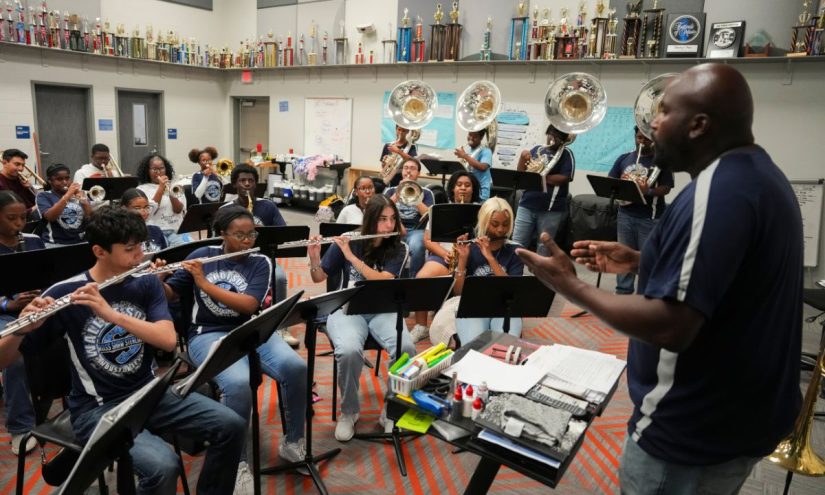
In a music classroom, students learn to listen deeply, adjust in real time and collaborate toward a shared goal. They develop discipline through practice and resilience through repetition, and they learn to manage pressure while communicating something meaningful in front of others. These are not simply artistic experiences; they are cognitive and human ones.
Music doesn’t just engage the brain, it changes it. In just a few years, children who study music show measurable structural differences in the regions responsible for processing complexity and in the pathways that connect the entire brain. This is not enrichment, this is development. And the evidence goes further: Research has consistently shown that structured music training strengthens attention, memory, pattern recognition and executive function — the very capacities that support the skills included in the Portrait of a Graduate framework.
But beyond the research, children’s experiences are just as compelling. Students who have music classes daily develop not only skill, but confidence, focus and a sense of agency. They begin to see themselves differently — not just as learners, but as contributors and creators.
For more than a century, the Regents exams signaled what New York’s education system valued. Now, the Portrait of a Graduate is redefining what student success looks like, shifting the focus toward the capacities young people need to thrive in the world beyond school. It’s up to educators to build a curriculum that genuinely develops them.
The Arts Aren’t ‘Nice to Have’ — They Can Boost Student Engagement & Attendance
The Portrait of a Graduate asks schools to develop students who can think critically, communicate clearly, collaborate under pressure and navigate ambiguity with confidence. Music education has been doing exactly that in classrooms across the state for generations. The research confirms it. The students who have lived it demonstrate it.
As New York moves away from the Regents exams and redefines what it means to graduate, music education may be the most important curriculum for achieving the student success New York state is after.
Did you use this article in your work?
We’d love to hear how The 74’s reporting is helping educators, researchers, and policymakers. Tell us how
