

U.S. News: What are DU’s Learning Cohorts, and how do they support first-year students?
Rinehart: DU’s Learning Cohorts bring together first-year students and a team of staff, faculty, grad student and community mentors who all share a passion, such as care for the environment or the future of health.
- Together, students discover how their unique interests, skills and talents prepare them to turn passions into action – at DU and beyond.
- Open to all first-year students, Learning Cohorts are perfect for connecting with peers and mentors and digging into the issues that students care about.
- Designed to fit flexibly into class schedules, students explore different topics through sprint classes (offered in a concentrated amount of time outside of the usual class schedule), conversations with community leaders, field trips and more.
Get the admissions edge with ‘Getting In’!
Have the parent playbook for applying to college delivered to your inbox each Thursday.
By clicking “Sign Up”, you will receive the latest updates, including emails, from U.S. News & World Report and our trusted partners and sponsors, and you agree to our Terms and Conditions & Privacy Policy.
U.S. News: DU is unusual in integrating an urban and a mountain campus. How does that shape the student experience?
Rinehart: Our dual‑campus environment is central to delivering the 4D Experience, DU’s holistic approach to education that supports intellectual growth while also nurturing students’ character, well‑being and sense of purpose.
The main DU campus sits on the edge of Denver, a cultural and civic hub.
- Denver provides students with access not only to professional internships and industry connections, but also to arts, culture, sports and community engagement.
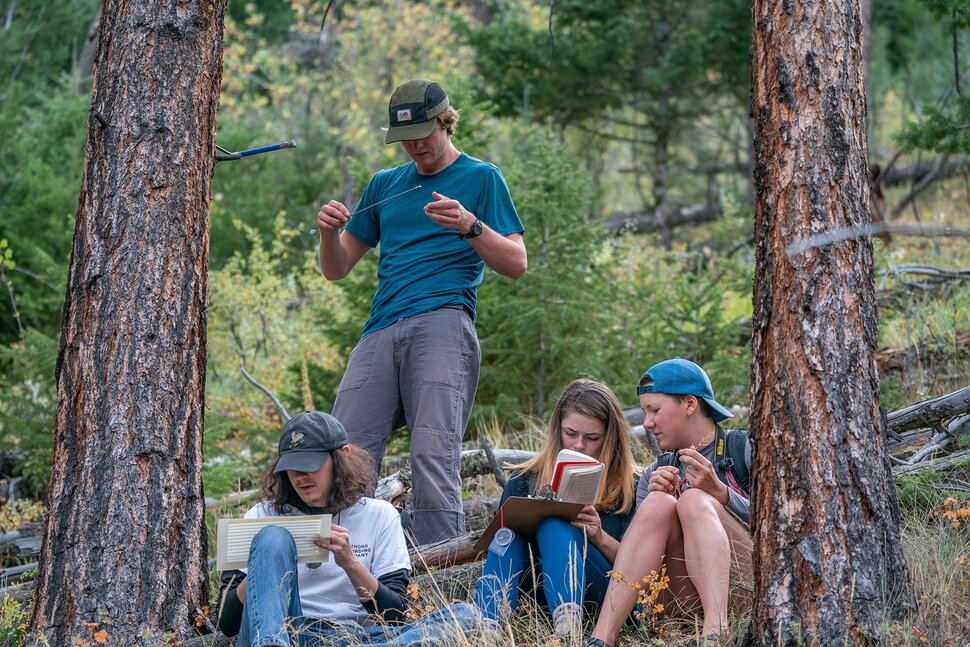
Just two hours away, the Kennedy Mountain Campus in the Rockies is designed to complement academic pursuits, support personal development and be an outlet for play with a purpose.
- KMC hosts First Ascent, an immersive weekend program that introduces new students to the mountain campus and empowers them to step outside of their comfort zone.
- The program helps them build connections with new peers and sets the foundation for experiences to come.
- From there, KMC curricular pathways include the natural sciences, business and leadership and even music, with the mountain environment serving as an extension of the classroom.
- Students may also engage in co‑curricular pathways with place-based learning, reflection and leadership development.
- Students may also pursue leadership roles as peer mentors on the main campus or as leaders of wilderness and adventure programs at KMC.
U.S. News: Why did DU just launch the state’s first reduced-credit online bachelor’s degree program, and how does it work?
The new reduced-credit bachelor program provides a faster and less expensive way for students – particularly adult learners – to complete their degree.
- It requires approximately 25% fewer credit hours than the traditional four-year degree, and students must have 24 quarter hours (or 16 semester hours) completed to be admitted.
Many who enter the workforce without a college degree find limited opportunities for advancement.
- This program rewards those who have earned some college credit by offering a more efficient way to complete their bachelor’s degree and advance in their career.
This program will never replace the four-year college experience. The accelerated degree program solves a problem for the early-to-mid-career individual who may experience limitations around time and money because of where they are in their lives.
