

Get stories like this delivered straight to your inbox. Sign up for The 74 Newsletter
Recently, Sen. Andy Kim of New Jersey put forth legislation to combat illiteracy and help millions of children living in what he called book deserts in American communities, without available libraries, bookstores or high-quality reading material. These kids, according to a press release from Kim’s office, are denied access to one of the “strong predictors of a child’s academic success,” If this bill is passed, it would provide $100 million to organizations to aid in the eradication of book deserts across the country.
On the surface, this legislation is ambitious, but for Black children living in book deserts, it does not go far enough.
According to the Cooperative Children’s Book Center, only 16% of children’s books feature Black protagonists. So, even if a Black child receives a book from an organization funded by this $100 million, it’s unlikely that book will have a protagonist that looks like him or her.
Black children everywhere deserve high-quality books with Black characters that speak directly to their dreams.
Reimagining this legislation for Black children, I’m reminded of former President Barack Obama’s vision of the “world as it should be.” My “should be” world is one where Black children enjoy an abundance of high-quality books with protagonists of African descent whose stories nurture the visions for their lives.
Access to these types of books should not be a luxury or an afterthought; it is foundational to the education of Black children. Without these stories, Black children are robbed of critical mirrors and windows into their potential. When they see their future selves, they can take small and big steps toward who they will become.
Years ago, I attended a meeting of literacy organizations in Pittsburgh, where I have lived for close to 20 years. Their leaders cited the cost of books with Black protagonists as a barrier to purchasing them. Curious, I researched prices and discovered that while a high-quality book like King of Kindergarten by Derrick Barnes cost $10, a lower-quality book such as Tarantula vs. Scorpion cost only $4.
The gap is not just about price — it’s about quality.
I’ve seen firsthand when I attend community events how some literacy organizations flood Black communities with low-quality books with strategic consistency. Meaning, they have a narrow focus on books that encourage reading rather than inspire Black children to see books as tools to develop vision for their life. These organizations do so to get books in the hands of families because that is one of the programmatic measures of impact in the industry.
In Picture Book Biographies, Black Kids Can See Themselves, and What They Can Be
These low-quality books feature cartoon, two-dimensional and animal characters, along with weak storylines. They may excite young readers for a moment but offer little to no insight into how children can develop into their future selves.
Tiffany Flowers, an endowed professor of literacy at Central Michigan University, asserted that Black boys living in book deserts need “access to books which reflect their experiences and motivation in the form of purposeful and leisure reading.” Her assertion similarly speaks to Black girls’ experiences.
I define high-quality books as having dynamic characters of African descent, robust storylines and insights that inspire young readers. Picture book biographies are among my favorite types of books of this kind.
When it comes to Black kids, there must not be any compromise. We should follow the example of Bill Strickland, the founder of the Manchester Craftsman Guild. He provided subsidized meals to students attending his organization’s educational programs because he believed good food is not just for rich people, but it’s for everybody. Similarly, I believe high-quality books should not be just for rich people; they should be for everybody, especially Black children living in working-class communities.
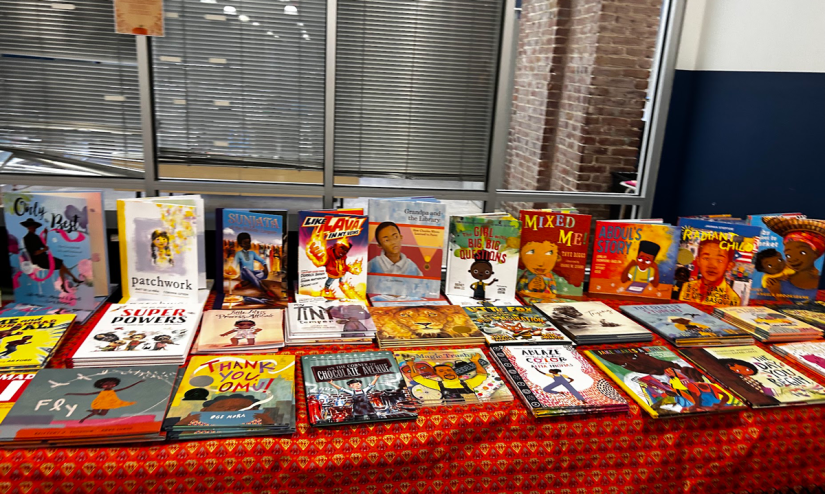
Years ago, my wife and I hosted a pop-up bookshop at a local organization in Pittsburgh during Black History Month. A young girl approached our table and asked for a book about Black history. My wife showed her several books, while the girl’s tutor explained that she lived in a home where the adults did not read. The tutor said the girl’s family was not going to buy any books. As the tutor and the girl left the store, my wife put the books in a bag and handed them to me, asking me to give them to the girl. I hurried after them and gave her the bag.
A year later, I saw the tutor again, and she told me the books we gave her had a profound impact on the girl. The tutor has since purchased more books for her, as an investment in the girl’s dreams and future.
My call to action is for literacy organization leaders who conduct book giveaways to consider the following when purchasing books for Black kids. First, examine the types of books your organization is providing. Are you giving children high-quality books that inspire them to think about their dreams? Second, what larger theme(s) are your books speaking to? Third, high-quality books serve as tools that kids can grow with and glean important insights from over the years. Fourth, high-quality books have illustrations that allow the reader to follow the story as if they were an active character in it. Lastly, high-quality books leave an imprint on the reader’s heart, making them want to read them to their children when they grow up.
Ultimately, when purchasing books for Black children, don’t frame the choices as a matter of quantity versus quality. Think of each book as an investment in Black children’s dreams — because it truly is.
Did you use this article in your work?
We’d love to hear how The 74’s reporting is helping educators, researchers, and policymakers. Tell us how
