

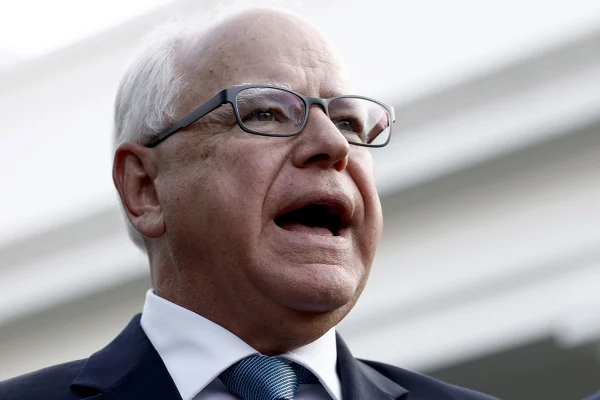
Governor Tim Walz and other Minnesota leaders defended the state’s in-state tuition rates for some noncitizens. The Department of Justice continues to fight the policy.
Anna Moneymaker/Getty Images
The U.S. Department of Justice is ramping up its legal battle with Minnesota after a federal judge dismissed the department’s lawsuit against the state for allowing in-state tuition for eligible undocumented students. On Friday, the DOJ appealed the March decision, which will bring the case before the Eighth U.S. Circuit Court of Appeals, Higher Ed Dive reported.
Minnesota’s law allows undocumented students to qualify for in-state tuition if they meet certain criteria, including spending three years at and graduating from a Minnesota high school. (Undocumented students who meet the eligibility requirements and have an annual household income below $80,000 can also participate in the state’s North Star Promise Scholarship.) The DOJ claimed the policy flouts federal law by allowing a benefit to noncitizens that citizens don’t receive. But the judge sided with Minnesota leaders, who contended that the law also benefits citizens, such as out-of-state students who went to high school in the state.
The DOJ has sued nine states over laws that offer in-state tuition rates to some undocumented students, including a lawsuit filed against New Jersey just last Thursday. Some states, such as Texas and Oklahoma, swiftly gave in to the DOJ’s demands, while others continue to fight the ongoing lawsuits.
