

Join our zero2eight Substack community for more discussion about the latest news in early care and education. Sign up now.
The expansion of accessible early care and education has increasingly become a top priority for lawmakers across the country.
New Mexico has recently launched the United States’ first universal free childcare model, followed by Vermont and Maryland that are working to build capacity to support similar systems.
A national spotlight has also been cast on New York City’s efforts after promises on the campaign trail from Mayor Zohran Mamdani to expand free care for children as young as 6 weeks old by the end of his term in late 2029.
The conversation is growing at several different levels, with some states focusing on pre-K access and others looking into providing care even earlier. But, most are grappling with major roadblocks in scaling larger – and universal – initiatives, including questions on funding models and accountability.
Family Child Care Providers See Gains Under Vermont’s New Child Care Law
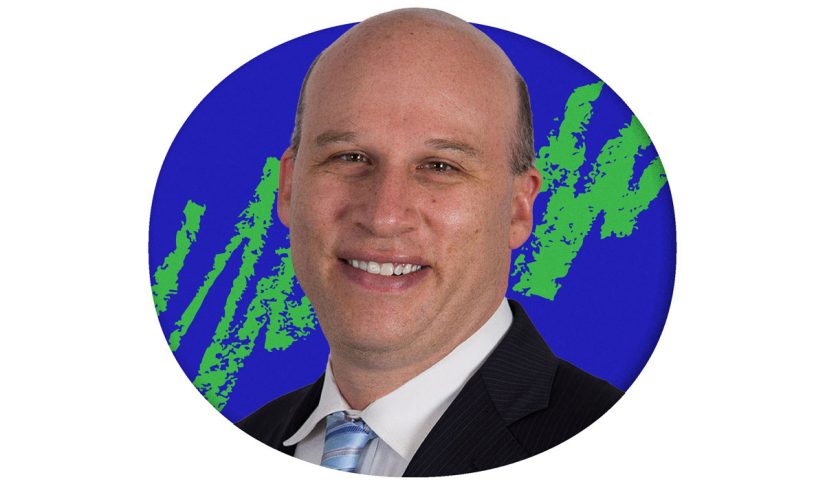
Shael Polakow-Suransky, a former chief academic officer at the New York City Department of Education, and the current president of Bank Street College of Education, spoke with The 74 about childcare trends and what it’ll look like to create higher quality programs as states look to expand access.
This conversation has been edited for length and clarity.
To kick off our conversation with the idea that there is a lot of movement around early childcare right now and accessibility to it, what are we seeing across the country and what are states investing in or considering legislation around?
We’re not getting any help right now from the federal government. During the Biden administration, it was the opposite. There were federal funds flowing to states specifically to do this work, and that’s part of how you got some really interesting, innovative stuff happening in states not that long ago.
Vermont is one of, I think, only two states now that have a really strong program to repay student loans for early educators. Kentucky guaranteed for childcare workers that their own children would have free or deeply subsidized care.
Kentucky Found an Incentive to Keep Early Educators on the Job
New Mexico is one of the most interesting examples right now because in November 2025, they launched universal childcare.
One of the things that is striking about their strategy is that they created a dedicated permanent revenue stream for it, … so it’s not conditioned on the federal government being able to support it, or an annual tax appropriation. That makes it stable in a way that’s unusual. They have also specifically said that competitive educator compensation is a goal which is really different.
D.C. is the other place that has done something similar to this. In 2018, they created a tax on high-income earners that had an explicit call around pay parity [for early care workers], and it gave people initial one time payments [up to $14,000]. Then, they created a salary scale based on educational attainment. They were also trying to push people to get the training that they needed to deliver at a high quality, and during the phase of that project, the employment in the sector grew by 7% and retention rose to over two thirds.
Pay Equity Fund for D.C.’s Early Educators Faces Possible Elimination
In most places, including New York City, early childhood folks’ turnover is five times the rate of what you see in K-12 settings. That turnover is a function of the low wages and and sometimes the lack of training as well, because if you’re not doing well in your job, you don’t want to stay in it.
In New York, a lot of our workforce is actually in poverty. More than half of New York’s early educators are relying on public assistance. We have more than 16,000 children statewide who can’t be served because of vacant positions and this is where we actually have state funding for childcare seats, but we don’t have people to fill those positions. So I think those models of D.C. and New Mexico are really worth looking at other states.
What about missed opportunities that aren’t being considered when lawmakers are drafting legislation or proposing new funding?
When you think about elected officials and who they’re accountable to, the most clear promise you can make is X number of seats for X communities.
We’re going to have 2,000 new seats for 2-year-olds in New York City, … that is the thing that will stick in the minds of the public. That other layer, on quality, is harder to boil down into a sound bite.
When you create access, you could create a system that actually does damage if you don’t have quality. Quality is defined by what are the adults able to do with children once they have this time with them? We want it to be something that has real educational impacts, … and taking advantage of this incredible moment of brain development where 90% of your brain architecture is built by the time you turn 5.
What does high quality care look like? What are signs for parents to look for?
A quality learning environment for early childcare allows kids to move around freely and explore and interact with each other and with adults and the materials that are in the space, whether it’s blocks, or art supplies, or a dress up area, or a water or sand table.
In low-quality settings, a lot of times what’s happening is kids are in some way, physically restrained from moving, and this is done in the name of safety. In that low-quality setting, you don’t have enough adults, the physical layout of the space isn’t totally safe for a toddler to be wandering around and the kinds of things that are going to be interesting for that toddler to pick up and stick in their mouth are not available.
In a low-quality environment, that child is maybe sitting in a high chair or in a playpen, and there’s an iPad going that they’re looking at which is not able to interact with them and is not supporting that development. You may be keeping the child physically safe, but if they aren’t able to interact and move, their brain development is not going to progress the way it needs to.
You want to set up the physical space, and you want to have the staffing to support that flexible movement and exploration, because that is how our brains develop – through those types of interactions with people and with materials. If the person is so stressed, either because their own life is so stressful because they’re not able to make ends meet and or their work environment is so stressful because they’re understaffed and working really long hours, that connection is lost.
When we talk about opening seats across the country, what are the odds that these seats are going to be low quality care programs?
There’s been research done over the years that has looked at the quality of early childhood settings and in general, that number of really good settings are like 20 to 30% of what we have. That doesn’t mean that the other 70% are low quality – it’s a spectrum. My guess is probably only 10%, maybe 15%, fall into that low quality bucket, but there’s a lot in between that high quality and low quality that needs work.
How can states and lawmakers take more accountability when they are considering opening more spots up to ensure that it is leaning toward the highest level of care for the youngest kids, especially developmentally?
Building a living wage is the most important thing because that brings people into the workforce. It encourages people to stay in the workforce. And as people stay, they develop experience and relationships with children. You can’t do that without training. So that’s the other big piece of this, what are we doing to train people well?
From birth to 3, there’s not a requirement anywhere in the country that you have to have a teaching license to teach at that level and there can’t be that requirement given the current compensation structure. So then, what is the requirement? If you’re not going to ask people to have a bachelor’s degree or master’s degree, … how do you provide them with training and support that will enable them to accelerate learning and development for children?
The goal is that you build in the resources for professional development for the existing folks who are already in the field, and then resources for people to get trained as they enter the workforce as well.
I’ll give you one example. Bank Street has partnered with New York City during the pre-K initiative because the state actually does require a master’s degree for pre-K teachers here and that’s a relatively new requirement, so there are a lot of teachers who were working before that requirement went into place, and are now out of compliance with that law.
The city asked us at Bank Street to design something specifically for that group that would be attuned to the fact that they already have lots of knowledge and skills and they don’t need to start from the beginning.
We created something called the Advanced Standing Program, which is a mastery based program for teachers who are already pretty experienced, and so they can do it much more quickly than a normal master’s degree. They get credit for their experience, so the cost is lower, and it’s historically been paid for partially by the city or by nonprofits where the folks are working.
So, creating those kinds of programs that are really responsive to the real needs of folks in this workforce, as opposed to a compliance requirement that pushes a lot of people away.
There’s some examples now of universal childcare, but in most states, it is pretty limited to low-income families or at a pre-K level. So, when we’re talking about this quality issue, I want to get into equity also. Childcare programs may be getting some of the highest needs students. How does the issue of quality play a role in development and readiness by the time these students enter the K-12 system?
The achievement gap that we see in K-12 schools between wealthy and low-income students – which is usually like a 20 or 30 point spread in achievement when you look at third grade or eighth grade test scores or high school graduation rates – is visible beginning at 18 months.
If you study toddlers, the same exact graph shows up between upper-income and low-income children. So why is that?
We know that’s exactly that moment where language development is happening in the brain, and so if a child is sitting in front of a TV all day by themselves, or iPad or and no one’s talking to them, no one’s interacting with them, then they’re going to be really low scoring around that language development.
There’s not much that’s different between upper income and lower income children except for the fact that upper income families have much more access to quality care. If we can provide that quality care across the income spectrum, there’s a shot at closing those achievement gaps later on.
We’ve talked about New York City a little bit, and I know through several decades, there’s been a push and pull around expanding this early childhood care access under each mayor. Can you talk a little bit about the history of what New York City has tried, what’s new now under Mamdani’s proposal and whether that will be effective or not?
One of my big regrets, I was senior deputy chancellor under Mayor [Mike] Bloomberg for his third term in office, and it was around that time that we started to expand pre-K, but it was a very modest expansion. As someone who came up as an educator in middle schools and high schools, I didn’t really know what I know now about the power of early childhood. I don’t think any of us at the DOE in those days, other than folks working in the early childhood division who weren’t at the decision making table, understood how powerful the impact on educational equity is if you invest in early childhood.
It took Mayor [Bill] de Blasio making the pre-K commitment as part of his first mayoral campaign to make that the focus for the Department of Education and for the city as a whole. They added 60,000 new seats in pre-K, then expanded pre-K as well in the second term.
Mayor [Eric] Adams made lots of promises about working on this but really didn’t move the ball.
What Mayor [Mamdani] campaigned on is that there’ll be free childcare for kids from birth to 5. It’s beginning with expanding the number of seats for 3-year-olds and expanding 2-year-olds. It’s a fairly modest expansion in this first year, and I think the question that will face the mayor over the rest of this term is how do you get to that larger goal where everyone has access and and how do you do it in a way that pairs access with quality?
I think they’re off to a good start.
I want to pose the question you said Mamdani’s team will have to answer. How do states lead large scale expansion and ensure quality as they try to expand to everyone?
One of the lessons that we learned from the pre-K expansion is that you need to pay attention to the existing ecosystem and not lose capacity as you build capacity.
One of the downsides of the pre-K expansion during de Blasio’s term was that they put a lot of the seats into public elementary schools, and the teachers became part of the UFT. They got regular salary the same way any K-12 teacher, which is great, but then the nonprofits that were running childcare programs as part of the initiative didn’t have the funding to match those salaries, and so a lot of people left the nonprofit daycare centers … and even worse, family childcare, which are small businesses run out of people’s homes that usually serve children birth to 5, were not initially included in the strategy.
We actually saw a loss of childcare seats in the birth to 3 space when some of those folks went out of business.
I think part of the solution this time around, particularly because we’re working with younger children, is how do you support family childcare as part of this? How do you help improve the quality and the economic viability of that?
Last question just to wrap us up. What you had talked about during your time at the NYC Department of Education with not paying attention to childcare, I think is something that was universal for lawmakers early on too. This conversation has really picked up in the last five years or so. How likely is it to continue seeing such acceleration in this movement?
I think one of the interesting things about childcare is it’s a bipartisan issue in most places in the country.
The governor of Ohio, a massive Republican governor, has done massive investments in early childhood. Nebraska, Louisiana, lots of red states have really prioritized this, and the reason why is that more than three quarters of families have both parents in the workforce, so people need childcare. They need a place for their children to be. They need to be able to afford it, and they want it to be safe, and they want their children to be learning.
From an educational equity standpoint, we need that quality in order to sort of solve our broader problems in terms of achievement gaps in our school system.
We haven’t seen as much investment in the second Trump administration, but the first Trump administration actually saw the biggest increase in early childhood funding since the Clinton administration. Biden went even further. Those were both a Republican president and a Democratic president actively investing in this. We have Republican governors and Democratic governors actively investing in this.
This is something that really speaks to people, and so I think for that reason, we are going to continue to see new public funding flow to this. It may not come as fast as I would hope, but we’re on the trajectory in the right direction.
Did you use this article in your work?
We’d love to hear how The 74’s reporting is helping educators, researchers, and policymakers. Tell us how
