

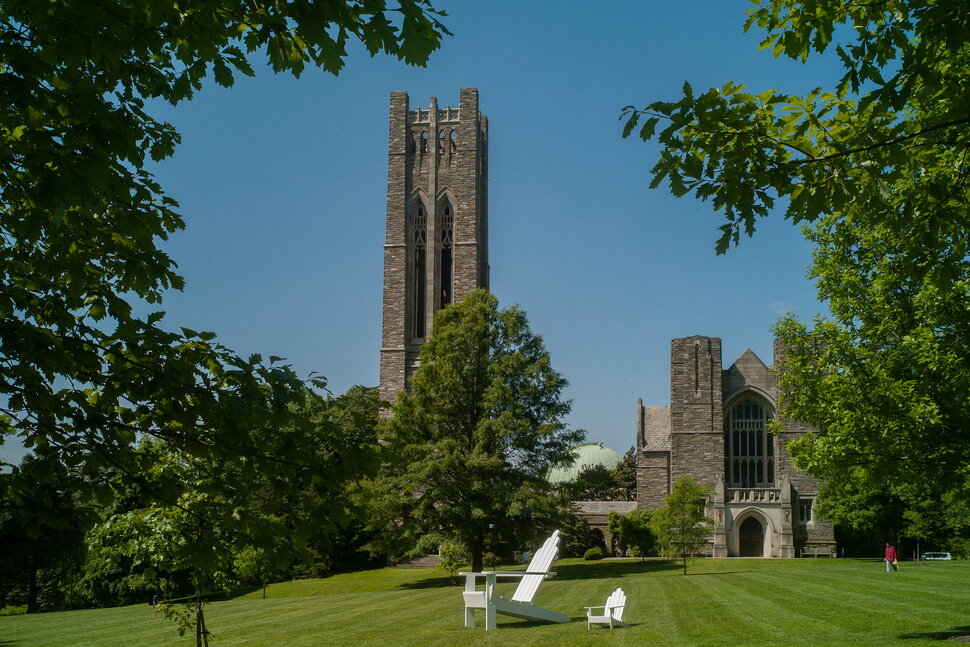
Diane Anderson, professor of educational studies and coordinator of the “Learning for Life” program at Swarthmore College, shared insights recently. The responses have been lightly edited for length and clarity.
U.S. News: When you first pitched a program where undergraduate students and hourly facilities or dining staff would teach each other skills, did you face skepticism, and if so, how did you overcome it?
Diane Anderson: Learning for Life (L4L) was a response to a student request for an adult literacy program. That was not a good fit because our staff are smart and committed. Instead, the VPs for Facilities and HR and I started our mutual and reciprocal learning program. We leaned more fully into Swarthmore College’s educational mission, striving for Martin Luther King’s “beloved community.”
Courtesy of Swarthmore College
- We welcomed everything: gym workouts, radio broadcasts, computer work, knitting, photography, gardening, digital storytelling, quilting, woodworking, poetry, algebra, world religion study and more.
- I explained a different way of thinking about learning as something we all do, every day, no matter who we are.
- Other than that, we grew from the ground up, with inclusive, respectful and joyous activities. L4L has disrupted class, race and other troubling hierarchies for staff and students as they live into their full identities as teachers/learners. We are redefining learning.
U.S. News: How do the logistics work for this program? Are staff members compensated for their time as instructors, and how do you ensure participation doesn’t disrupt daily operations?
Anderson: Student coordinators are compensated as student employees to collect ideas from staff and students, organize, advertise and attend workshops and events, and more.
- Staff coordinators are paid for their general responsibilities on campus; this is one part of their job. Non-compensated organizers of the program have included all participants – staff, students, faculty – sometimes as a student field placement in an Educational Studies course.
- Supervisors have endorsed the program and participated. Staff balance their work with participation in L4L; they collaborate in their jobs or manage their workload in other ways. Staff can work with supervisors to have up to 2 hours per week of their paid time to participate.
- L4L enhances the work experience by building staff belonging. Participants are in contact with one another to respect everyone’s time and work.
U.S. News: What might a scaled-down, lower-cost version of this mutual-learning network look like at a different type of campus – such as a large public university or a resource-constrained community college?
Anderson: L4L costs very little to run. Participants are not compensated as we are sharing knowledge. We have obtained grants for events such as field trips and national conferences. Most recently, costs have been covered by our Teaching and Learning Commons. Expenses include:
Get Higher Ground in your inbox each week!
The must-read newsletter for leaders shaping higher education’s future.
By clicking “Sign Up”, you will receive the latest updates, including emails, from U.S. News & World Report and our trusted partners and sponsors, and you agree to our Terms and Conditions & Privacy Policy.
- Compensation for staff and/or student coordinators
- Materials for workshops when needed – yarn, cooking ingredients, tools, books, outdoor games or pumpkins for carving. Many materials are available from existing resources on campus, such as our MakerSpace, Office of Student Engagement or community donations. The program acts as an access gateway, making sure campus resources are accessible to all
- Event supplies, such as food for end-of-semester breakfasts
Alumni often claim their lives have changed due to their participation. They have recently made donations to L4L to provide more resources for partnerships and workshops. This shows how the process of teaching and learning, proximally and reciprocally – with skills, empathy, respect – has lasting effects.
