

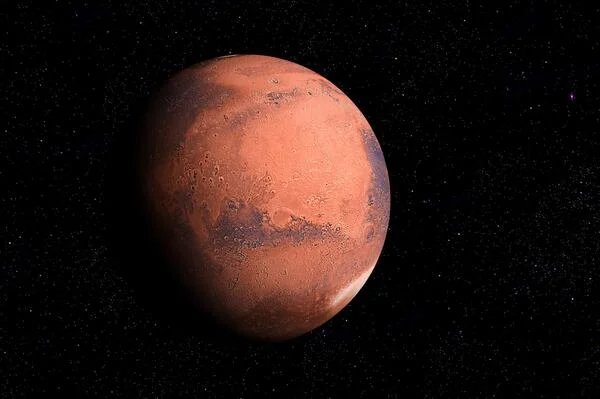
In 1997 Caltech and the Jet Propulsion Lab directed the Mars Pathfinder, the first successful rover to traverse another planet.
Caltech will compete to operate and manage the Jet Propulsion Lab, a federally funded research and development center it launched in 1936. On Friday, NASA announced plans to conduct a competition and awards process for JPL “to ensure continued accountability and strong value for U.S. taxpayers.”
Caltech has managed the lab for NASA since 1958, when the space agency was established, through a contractual relationship. Its current 10-year contract, with a potential maximum value of $30 billion, will end Sept. 30, 2028.
“As America’s space economy evolves, we have a responsibility to the American people and the scientific community to evaluate how we can execute faster, operate more efficiently, and continue to deliver world-class science and engineering at the highest level,” NASA administrator Jared Isaacman said in a press release about the plans. “The decision to compete this contract reflects NASA’s commitment to strong stewardship of taxpayer resources and positions Jet Propulsion Laboratory to continue driving world-changing scientific discovery and technological innovation for decades to come.”
The procurement process reflects broader government practices, the statement said, including at the Department of Energy, which has held full and open competitions for five of its 16 federally funded research and development center management and operations contracts over the past 10 years.
In a memo to the Caltech and JPL communities, Caltech president Thomas F. Rosenbaum and Caltech vice president and JPL director Dave Gallagher said the announcement “comes as no surprise.”
“We have been in discussions with the agency about their intent to compete the contract and welcome a fair and open competition,” they wrote. “Caltech is well prepared with a team established last summer to ensure we are positioned for success, and we will respond to the request for proposal (RFP) once released.”
Over the course of nearly seven decades of running the NASA lab, Caltech and JPL have pushed the boundaries of human understanding of the universe. The Cassini spacecraft was the first to explore the rings of Saturn in 2017; in 1997 JPL directed the Mars Pathfinder, the first successful rover to traverse another planet; and JPL produced the first soft landings on the Moon in 1966, paving the way for the Apollo moon-landing mission.
