

For too long, higher education has acted as if learning only counts when it happens inside a classroom. Millions of Americans know otherwise.
Opportunity should not require relocation, excessive debt or navigating systems built for someone else’s life. Our nation needs to broaden its definition of where learning happens and recognize learning wherever it happens.
Apprenticeship is a natural place to begin building that broader network of opportunities. At a time when the nation is debating college costs, workforce shortages, economic security and the future of work, apprenticeship offers something rare: a solution that works for students, employers and communities at the same time. It is a framework to learn, earn and advance.
As chancellor of the California Community Colleges, serving more than 2.2 million students across 116 colleges, I see every day that students want pathways that are practical, affordable and connected to opportunity. Employers want workers who can contribute on day one and continue growing over time. Communities want stronger local economies.
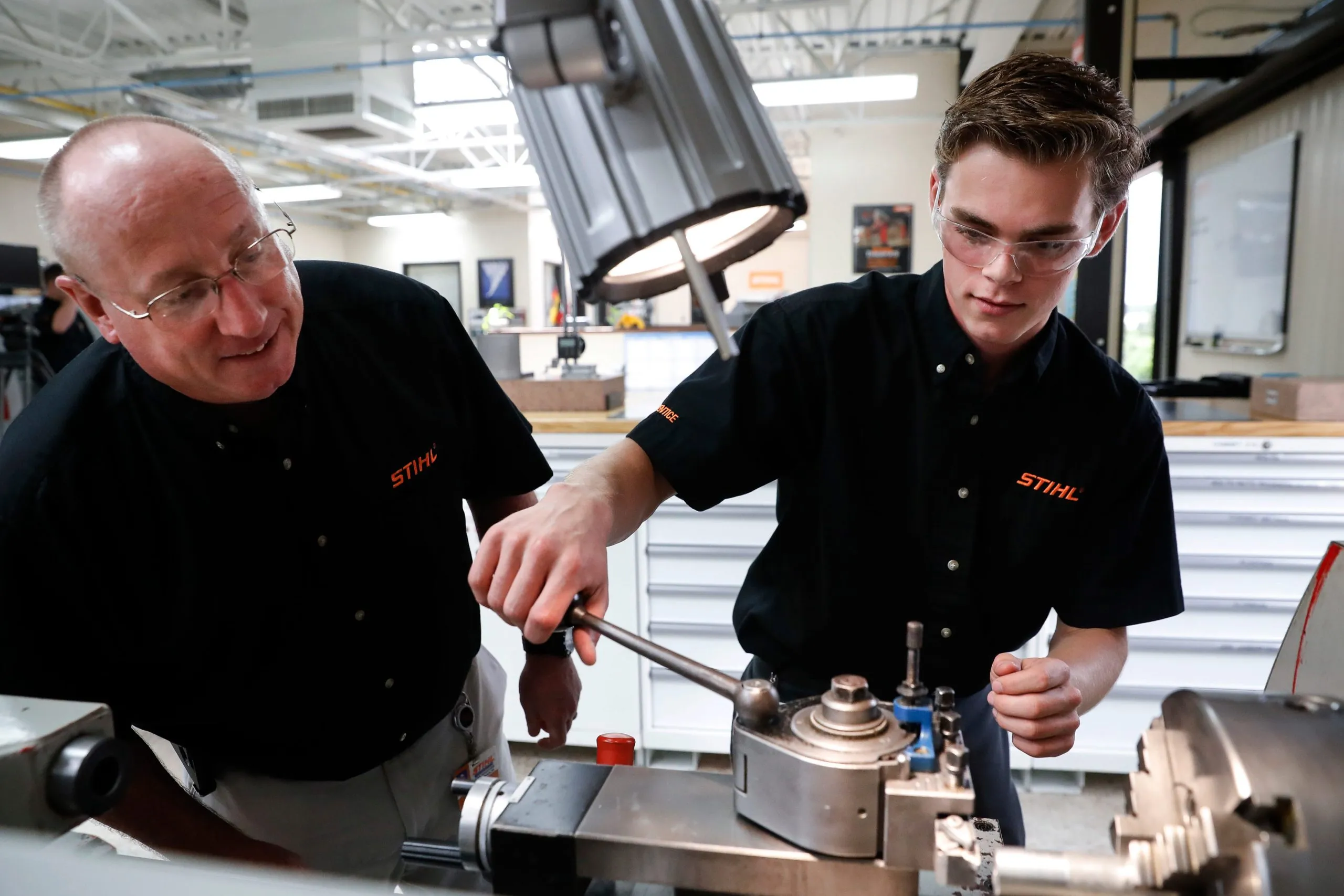
Apprenticeships offer exactly that. They combine paid, on-the-job learning with classroom instruction. They allow students to earn a paycheck while building skills. They reduce the need for debt. They create real experience, real momentum and real credentials. They give employers a direct hand in shaping the talent they need while strengthening communities’ access to essential workforce services.
Related: Interested in innovations in higher education? Subscribe to our free biweekly higher education newsletter.
Importantly, apprenticeships connect education to the dignity of work. They remind us that intelligence is expressed in many forms, through design, craftsmanship, leadership, repair, teaching and service.
What makes apprenticeships especially powerful is that they work at scale and deliver measurable results. Research from California’s community colleges shows that apprentices consistently out-earn their peers and achieve higher success rates in their coursework across nearly all fields of study while enrolled. And they continue to out-earn their peers two years after completing their programs.
For employers, that means a reliable talent pipeline with strong retention. For students, it means building skills without taking on debt. Apprenticeships can change their lives.
One example: A student named Manuel is an apprentice in one of our manufacturing programs. His pathway began in a classroom and moved into a paid computer-controlled machine operator role at Eibach, Inc., a major U.S. and global manufacturing company. After completing his first apprenticeship, he is now advancing into a higher-level programming track, earning a salary while he learns and builds his career step-by-step.
Congress has an opportunity to strengthen and expand this proven workforce strategy. Doing so means sustained investment in apprenticeship programs, stronger incentives for employer participation and better alignment between workforce and higher education policy to expand earn-and-learn models nationwide.
Related: The US wants more apprenticeships. The UK figured out how to make them coveted roles
Internships and work-based learning are core to Vision 2030, the roadmap for California’s community colleges. Education must be connected to economic security, social influence, workforce relevance and student success. Within that framework, apprenticeship is the gold standard.
The model extends well beyond the traditional trades. California is expanding apprenticeships into nursing, teaching, information technology, advanced manufacturing and public-sector careers. In health care, that means helping incumbent workers quickly build skills and move into higher-wage roles. In partnership with labor, it means ensuring apprenticeships lead to recognized credentials and degrees, not just short-term training.
Scaling this kind of opportunity requires partnerships. California’s community colleges work closely with employers, labor organizations and community-based groups to design programs that meet real workforce needs.
Faculty have been deeply engaged in advancing credit for prior learning. They are creating rigorous processes to recognize the knowledge and competencies developed in these apprenticeship environments and translate them into appropriate academic credits that lead to degrees.
Related: Apprenticeships for high schoolers are touted as the next big thing. One state leads the way
A journey-level electrician should see a pathway to an associate degree. A manufacturing apprentice should be able to build toward engineering technology credentials. A health care worker should be able to turn experience into academic progress and career advancement.
All of this matters for adults returning to education, for veterans transitioning to civilian careers and for communities that want to see opportunity in more places.
Apprenticeships deserve broad-based support and national scale. They are both practical and proven, rooted in work ethic and upward mobility. They strengthen both the economy and the social fabric.
America will build a stronger future when we decide to invest in the people who will build it.
Sonya Christian is the chancellor of the California Community Colleges, the largest system of higher education in the nation.
Contact the opinion editor at opinion@hechingerreport.org.
This story about apprenticeships was produced by The Hechinger Report, a nonprofit, independent news organization focused on inequality and innovation in education. Sign up for Hechinger’s weekly newsletter.
This <a target=”_blank” href=”https://hechingerreport.org/opinion-as-graduation-looms-students-need-pathways-that-are-practical-affordable-and-connected-to-opportunity/”>article</a> first appeared on <a target=”_blank” href=”https://hechingerreport.org”>The Hechinger Report</a> and is republished here under a <a target=”_blank” href=”https://creativecommons.org/licenses/by-nc-nd/4.0/”>Creative Commons Attribution-NonCommercial-NoDerivatives 4.0 International License</a>.<img src=”https://i0.wp.com/hechingerreport.org/wp-content/uploads/2018/06/cropped-favicon.jpg?fit=150%2C150&ssl=1″ style=”width:1em;height:1em;margin-left:10px;”>
<img id=”republication-tracker-tool-source” src=”https://hechingerreport.org/?republication-pixel=true&post=116176&ga4=G-03KPHXDF3H” style=”width:1px;height:1px;”><script> PARSELY = { autotrack: false, onload: function() { PARSELY.beacon.trackPageView({ url: “https://hechingerreport.org/opinion-as-graduation-looms-students-need-pathways-that-are-practical-affordable-and-connected-to-opportunity/”, urlref: window.location.href }); } } </script> <script id=”parsely-cfg” src=”//cdn.parsely.com/keys/hechingerreport.org/p.js”></script>
